Rhetorical Analysis (Chapters 4-6)
Welcome back to my blog! I have continued reading Just Mercy, and have been enjoying it. While reading, I've noticed the style in which Stevenson writes and the effect this has on the book. Stevenson's writing style is very informative and unbiased, while also incorporating the use of emotional appeal (pathos).
In chapter four we learn about the case of Herbert Richardson. He was a Vietnam War veteran and endured lots of traumatic events, such as one mission where his entire platoon was killed except him. He had attempted suicide, and experienced nightmares and "disabling headaches" (Stevenson, 74), as well as PTSD. Herbert was sent to a veterans hospital in New York City where he met a nurse there and began dating her. After wanting to end the relationship, the nurse distanced herself from Herbert. Richardson was persistent in winning her back and formed the ill-judged plan of planting a bomb on her porch and coming to her rescue when it detonated. The nurse's niece went out on the porch instead, and shook the clock, triggering the explosion and killing her instantly. Herbert was sentenced to the death penalty as a result.
One way Stevenson connects with his readers is through the appeal of pathos (emotion). Using this appeal helps Stevenson build his argument and connect with the reader. An example of Stevenson using this appeal is shown when he's talking about Herbert Richardson's incident that leads him to prison.
"Hebert knew both children. In this community, children were always roaming the streets looking for something to do. Herbert loved kids and would invite them into his yard, pay them to do errands, and talk to them. He started making cereal and cooking for the kids who would wander by. The two girls had come by his house for breakfast" (Stevenson, 76).
In this passage, Stevenson uses the appeal of pathos to show Herbert's kindness and goodwill. Although Richardson killed a young girl and it is still his fault, Stevenson's emotional appeal forces readers to feel sympathetic for Richardson and realize how unintentional it was.
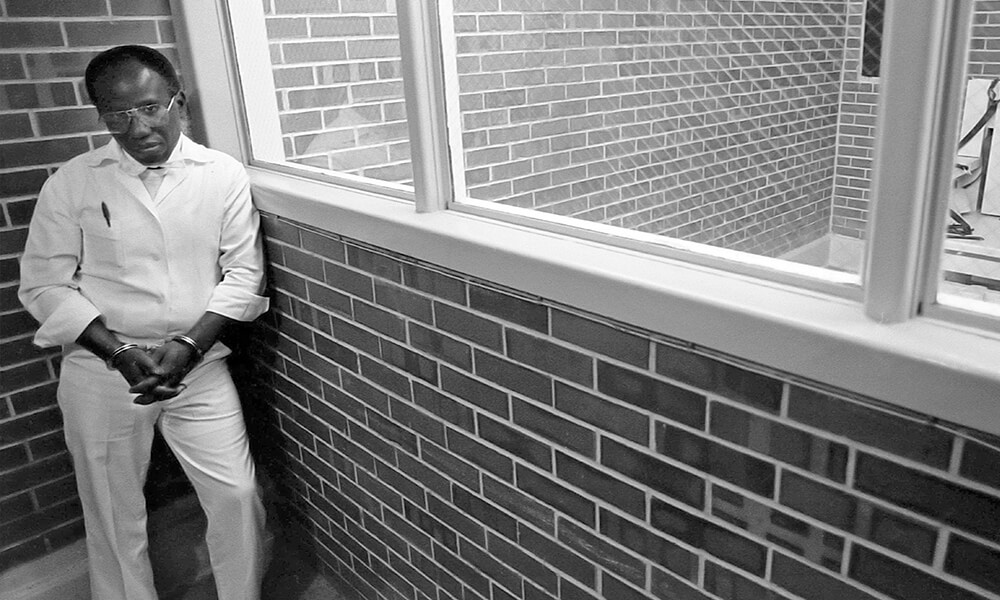
Herbert Richardson in 1989, shortly before his execution.
Another mode of persuasion Stevenson uses is logos (logic). The appeal of logic provides reasoning and facts. Stevenson uses this appeal to help explain Richardson's PTSD and how this affects him after the war. Stevenson writes,
"Herbert became one of thousands of combat veterans who end up in jail or prison after completing their military service. One of the country's least-discussed postwar problems is how frequently combat veterans bring the traumas of was back with them and are incarcerated after returning to their communities. By the mid-1980s, nearly 20 percent of the people in jails and prisons in the United States had served in the military" (74-75).
Here Stevenson appeals to logos by using a statistic and reasoning. This appeal backs up his argument that Richardson should not be on death row for his crime, and that more representation for postwar veterans is necessary. I think although Richardson did commit a crime, more should have been done to help his PTSD and traumatic actions after he got back from the war. All in all, I think justice should be served, and I don't think the death penalty has a place in that.
I really liked this section of the book because Stevenson writes about more than Walter McMillian's case, and it gives a better representation of the other prisoners on death row. There is a range of backgrounds among those prisoners, reasons why they were put on death row, and how they're not provided legal assistance. I liked reading about Herbert Richardson's case because it opened my eyes to what post-war veterans deal with, even though it is sad.
Works Cited
Herbert Richardson. Equal Justice Initiative, 2021, eji.org/cases/herbert-richardson/. Accessed 9 Apr. 2021.
Stevenson, Bryan. Just Mercy: A Story of Justice and Redemption. 2019 ed., New York, Spiegel & Grau, 2019.

Dear Anna,
ReplyDeleteI liked how you explained why Stevenson got into the legal field. He was uncertain that he wanted to get into law but knew deep down that he needed to find a way to help those in poor conditions. Racial inequalities left people under represented due to their race and that is just not right. I appreciated the part where you explain the time he was approached by police as a young man and interrogated and pushed just because of his race. It helps to explain his passion in this field and why he needed to tell these stories.
Thank you!
-Sincerely, Kate